
LET THERE BE LIGHT ON YOUR DIVES: SOME THOUGHTS
It’s always interesting—and informative—to read the questions new divers ask on popular online dive forums. It’s a constant reminder to those with experience and more than a few dives logged that some of the issues we take for granted can seem like a big deal for a newbie.’
One common question that sometimes stumps novice divers concerns dive lights. Here’s our take on that issue.
There are a few things associated with dive gear that have gone through a more dramatic sea change than batteries. Battery technology in use today makes what was current a generation ago look Neolithic. This has also affected the design and function of several pieces of equipment, particularly lighting for still or video cameras, as well as casual handheld flashlights/torches used by sport divers.
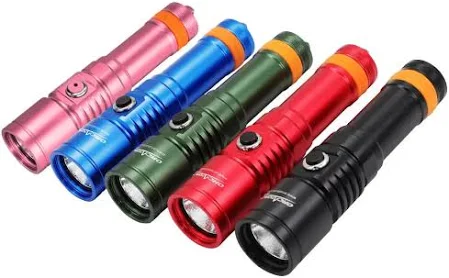
You may be old enough (sorry, experienced enough) to remember underwater lights before the introduction of LEDs and Lithium batteries. Big, bulky, often prone to flooding, short burn-times, and a weak light output. Today, we have more than two dozen specialist manufacturers selling robust and inexpensive handheld video and variable beam lights, the size of a dill pickle, that punch out 1000 lumens or more for hours. Times change.
The average recreational diver looking for something to bring out the colours on a reef or wreck dive is spoiled for choice. For a modest investment, she can carry one attached to her harness and a backup in a pouch or pocket, barely noticing them. For the serious technical diver or photographer/videographer, the situation—and benefits—are similar. More power, less bulk, better results, lower cost.
Of course, some things haven’t changed. The benefits of carrying a light make it a nice-to-have accessory on most dives and an essential on deeper dives, dives in murky conditions, and on twilight/limited visibility or night dives. Sound advice in all situations is to ensure that lights are ready for use (with charged batteries) and suitable for the task at hand. For example, provide the light’s burn time promises illumination for the entire dive. (A working metric is that lights for a dive or group of dives with two hours of potential bottom time, for example, should have a burn time of one third longer… in this case, at least three hours.) Another check is to ask if the type of beam the light kicks out is suitable. A wide (floodlight) beam is generally better for shooting video or taking stills, and gives a good general view in clearer water. But in murky water, a tighter beam (8-12 degrees) gives better results.
A great feature on most (if not all) late-generation handheld lights is a built-in indicator of battery life, progressing from green to blue to red. This is a real boon. Additionally, depth ratings for modern lights are almost irrelevant, as most appear to be rated well beyond 100 metres.
However, the advantages do come with a travel proviso.
When flying, check your airline’s rules and regulations: It’s crucial to check your specific airline’s guidelines for battery restrictions and quantity limits, as these can vary significantly based on watt-hour (Wh) limits for checked versus carry-on bags. Another travel tip is to always protect battery terminals with tape, a battery case, or a protective pouch to prevent accidental short circuits.
In summary, take a light. It’s easier now than it ever was. The benefits far outweigh any challenges.