
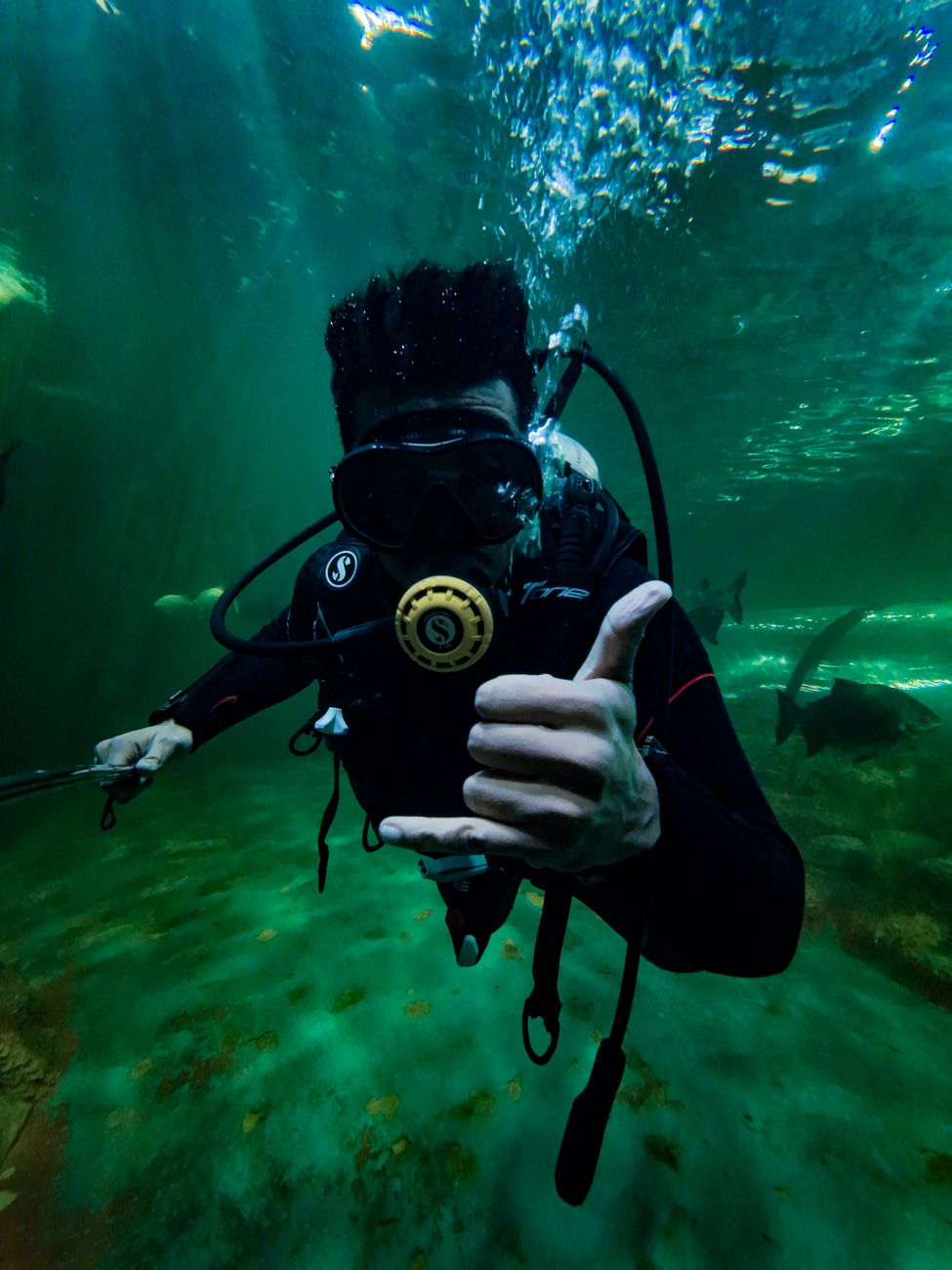
IT IS NOT LIKE BREATHING ON THE SURFACE
RAID’s open water student manual tells us to trust our scuba equipment, watch our instructor, breathe slowly, fully, and continuously… and warns us to never to hold our breath. All great advice and good things to remember, but let’s look at breathing underwater on scuba, in a little more detail, since it’s the first skill you need to completely understand and to get totally comfortable with.
With the right gear—that’s a recently serviced, decent-quality scuba regulator– breathing underwater is simple; however, it will never be quite the same as breathing on the surface. Things are slightly different… For example, on Scuba, we breathe through our mouth, not our Nose!
There are three other differences that we should also be aware of… but learning them and getting the hang of the effect they have is easily and does not take much effort.
THE REGULATOR’S JOB
- Ambient Pressure Delivery: The internal workings of a demand regulator is triggered when you inhale… and it delivers gas matched to the surrounding water pressure. In short, drawing breath is easy, because gas (air or nitrox) gets delivered at the correct pressure and “speed” to allow your chest to expand normally against the weight of water pressing down on it.
- Gas Density: You may notice that as you get deeper and the ambient pressure increases, inhaling starts to get progressively harder. The increase in the work of breathing becomes more noticeable below 18-20 meters. This happens because our lungs must push and pull thicker air through mechanical valves and airways. The effect of increased gas density is nothing for recreational divers to worry too much about… It’s much more of an issue for technical divers who need to be more conscious of the work of breathing and increased CO2 build-up. But recreational divers do need to be aware of it.
- Rhythm Over Reflex: On the surface, breathing is entirely subconscious. It’s fluid and feels normal. Underwater breathing requires a conscious, slow, and deep rhythm to manage the workload and drive gas exchange deep in our lungs… Divers with experience freediving, doing martial arts, and yoga seem to make the transition to underwater breathing quicker than most.
However, all this said and done, don’t worry too much. It’ll come to you, and you are going to HAVE FUN doing it!